
March 12th is Alfred Hitchcock Day! Celebrate the Master of Suspense by watching his films. We have also included some book recommendations about Hitchcock and his works, as well as the novels that inspired his movies.
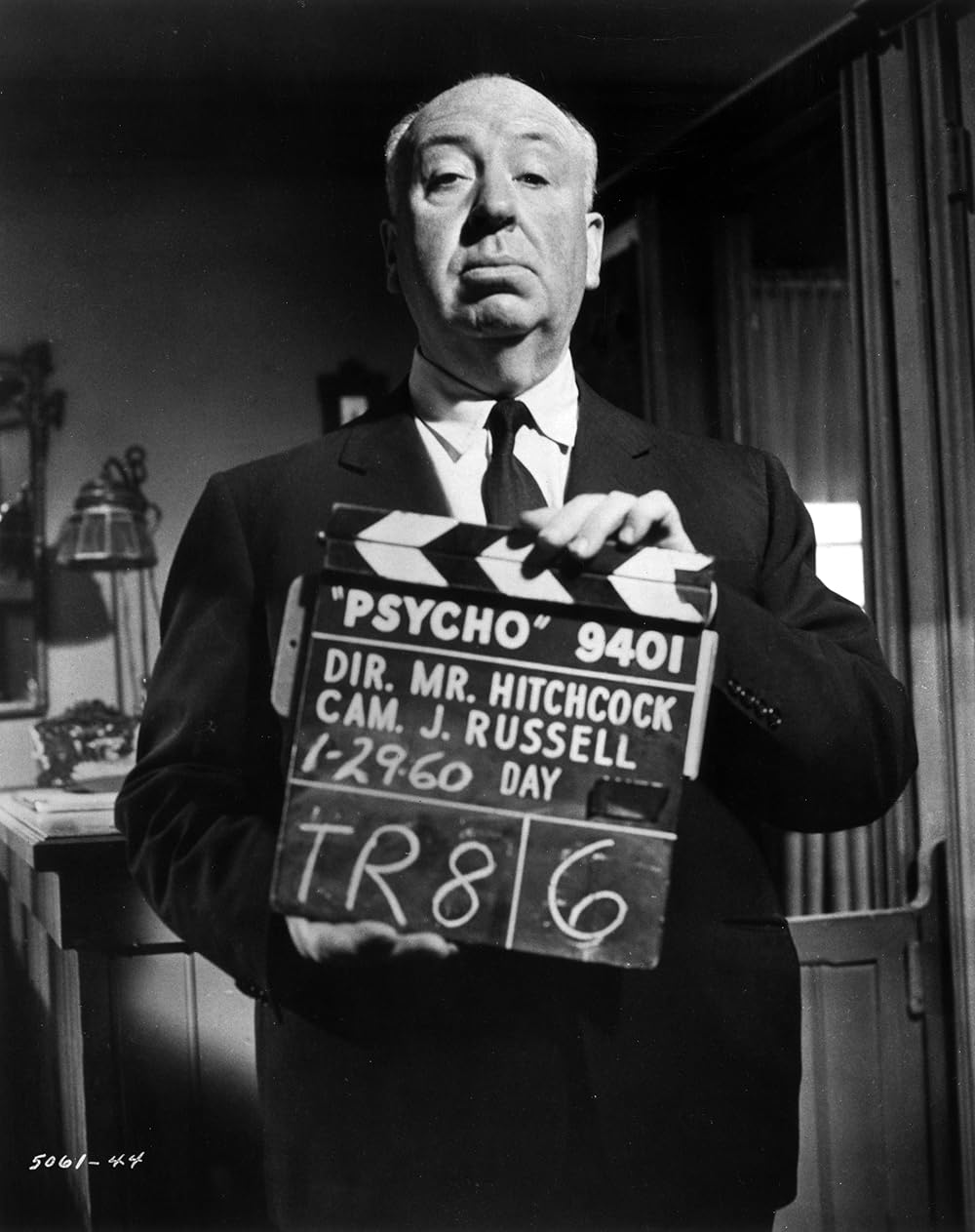
Alfred Hitchcock was born on August 13 1899 to William and Emma Hitchcock. He had two older siblings, William and Ellen (Nellie) that were reaching their teenage years by the time Alfred was born. Later in his life, Alfred couldn’t remember if he had any friends or playmates. His father William was a greengrocer and would go on to buy two fishmonger shops in East London. The family moved into the apartment space above one of the fish shops. Alfred recalled in an interview that he and his siblings smelled terribly of fish, and other kids didn’t like being around them. His parents had a variety of punishments that they would give their children if they stepped out of line. In an interview, Hitchcock remembered going to the local police station with a note pinned to his chest by his father saying he was bad and to put him in a holding cell. From these events, Alfred took up an interest in reading and transportation. When he was 14 years old, Alfred left school to start working. Shortly after, he took classes at the London County Council School of Marine and Engineering and Navigation which led to a job at the W.T. Henley’s Telegraph company.
In 1920, Alfred started with Paramount Pictures Famous Players-Lasky, making title cards for silent films. He also shadowed directors of a myriad of silent films and his first full length film was The Pleasure Garden in 1926. The first wasn’t a commercial success but critics appreciated his directing style. His next film was the comedy The Mountain Eagle. Alfred Hitchcock’s breakout movie was The Lodger of 1927. The Lodger is about an innocent protagonist falsely accused of a crime who becomes involved in a web of intrigue. This was the first time Hitchcock used the innocent man theme, which will appear more in his later films. The Lodger was Hitchcock’s first big commercial and critical success. Soon after, Hitchcock signed a deal with Gaumont-British studios and quickly made two of his first talking pictures, 1932’s The Man Who Knew Too Much and 1935’s The 39 Steps. These films alongside The Lady Vanishes (1938), and Sabotage (1936) reflect the growing violence and threats of facism as Europe braced for war. The 39 Steps, introduced British and American audiences to common Hitchcockian motifs such as the macguffin(red herring), and blonde actresses. The 39 Steps also caught the attention of David O. Selznick, who is largely responsible for bringing Hitchcock to America.
With the looming threat of war, British films were getting too costly, which led to many studios shutting down. The Hitchcock’s decided that the best chance to improve their careers was to move to America. Alfred Hitchcock and his family moved to America at the end of March of 1939, several months before Britain declared war on Germany. Alfred also had the feeling that the rising tensions in Europe would lead to an all out war. He was not able to be drafted so he decided to use his films as a warning to the growing danger. The Hitchcock’s did not want their young child exposed to war, so they decided to leave. David O. Selznick offered Alfred a four picture deal at $40,000 a movie, plus an extra salary when he wasn’t working. Hitchcock’s first film with Selznick was Rebecca, based on the book by Daphne du Maurier. Hitchcock and a few collaborators wrote a rough draft which infuriated Selznick. Selznick said that they were to be faithful to the book. After several rewrites it was finished, and production started 5 days after Nazi Germany bombed Poland. Selznick enforced the idea of a solid story and strong characterization. Hitchcock meticulously crafted the lighting, camera angles and film editing to evoke the required emotion from the audience.
Author Bill Krohn wrote “he did not film the same scene from different angles but that he would film different scenes that might give different outcomes and motivations for the characters. The film works because the narrator and view we get from Joan Fontaine shows her sweet nature and demeanor. Rebecca made Hitchcock an American name.”
They made the lavish estate on studio sets, using a combination of miniatures and matte paintings that create a sense of scale, texture, and mood. The house set of Manderly is 2 miniature sets, one was 50 feet in scale and took up a small stage. At the burning of Manderley scene, they used a wide camera angle to zoom in close for tight shots. Hitchcock never considers this his film because Selznick kept undermining his directorial vision.
After the success of Rebecca, Hitchcock continued to craft his methods for suspense, and also experimenting with other genres. These films include, Mr. and Mrs. Smith, Foreign Correspondent and Suspicion. Hitchcock’s personal favorite film also came to fruition in this period as well. Shadow of a Doubt takes his recurring idea of a serial killer and places him in small town America. This movie was filmed on location in Santa Rosa, California because Hitchcock did not want to hire SAG performers as extras and Santa Rosa fell outside the SAG hiring requirements. The villain of the movie, Uncle Charlie, is considered to be one of Hitchcock’s evil characters because he brings violence into his family home. Similar to Joan Fontaine in Rebecca, Shadow of a Doubt shines with Joseph Cotten’s menacing portrayal of Uncle Charlie. The movie is also his first American film as he filmed the story set in America rather than using landscapes to mimic Europe. Shortly before the film’s release, Hitchcock’s mother Emma passed away. A few weeks after that, his brother William died of an overdose. The Hitchcocks were not able to return to England for the funerals due to the war. After his mother’s death, Alfred hardly spoke about her. The deaths led to Alfred taking his health more seriously and went on a strict diet.
Once the war was over, Hitchcock formed his own production company, Transatlantic Pictures. This post war period saw Alfred moving into color pictures, with the first being Rope starring Jimmy Stewart. His early post war film that is often listed in his top five films is Strangers on a Train. This movie was based on the debut novel by Patricia Highsmith. Highsmith found out who bought the rights to her novel and was upset that it was sold for $7,500 dollars. Hitchcock enlisted famed crime fiction author Raymond Chandler to co-write the script but the two men did not get along. When Chandler left the project, Hitchcock hired Czenzi Ormonde to finish. The film is considered to be a master class in suspense writing.
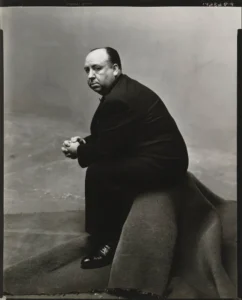
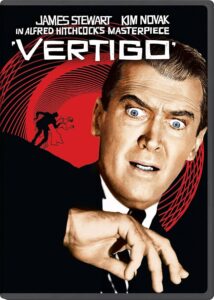
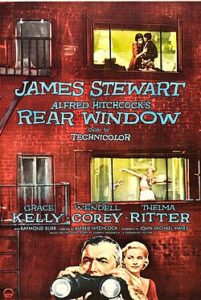
Alfred Hitchcock’s peak period is considered to be from 1954 to 1963. This time frame is when he released several masterpieces, Rear Window (1954), Vertigo (1958), North by Northwest (1959), Psycho (1960), and The Birds (1963). These films share common actors like Cary Grant, Grace Kelly, and Jimmy Stewart. Famously, Hitchcock struggled with coming up with endings. The end scene in his greatest work Psycho was made on the spot as the production almost went over schedule. Vertigo is cited by critics and filmmakers as Hitchcock’s greatest masterpiece. This film starring Jimmy Stewart and Kim Novak, centers around Stewart’s character’s vertigo. The movie had several technical inventions like the Dolly Zoom to emphasize the vertigo. Throughout the film, the colors red and green are made more intense that are referencing the madness of the central mystery.
Alfred Hitchcock died on April 29, 1980 from kidney failure. Hitchcock’s legacy to film is linked to his unique storytelling and camera techniques. Hitchcock worked primarily in the thriller genre, inventing the macguffin plot device which modern directors still use today. He is affectionately called “The Master of Suspense” because of his ability to change the tension of a scene with camera movements to the score. Hitchcock also is one of the first directors to become a brand. In addition to his movie contributions, Hitchcock had his own television show, Alfred Hitchcock Presents and his famous cameos in projects.
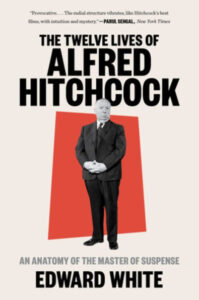

Books about Hitchcock
The Complete Films of Alfred Hitchcock by Paul Duncan
All the Films by Bernard Benollel
The 12 Lives of Alfred Hitchcock by Edward White
The Dark Side of Genius by Donald Spoto
Women Who Knew Too Much: Hitchcock and Feminist Theory by Tania Modieski
Hitchcock’s Women: The Unforgettable Women Behind the Legendary Director’s Dark Obession by Laurence Leamer
Books That Inpsired Hitchcock
The Birds by Daphine Du Maurier
Psycho by Robert Bloch
Rebecca by Daphne Du Maurier
Strangers on a Train by Patrica Highsmith
Thirty-Nine Steps by John Buchan
Movies
Psycho
Vertigo
Notorious
Rear Window
Strangers on a Train
The Birds
North by Northwest
Rebecca
Dial M for Murder
To Catch a Theif
Shadow of a Doubt
Thirty-Nine Steps
Recent Comments