
April 15th marked the 114th anniversary of the sinking of the RMS Titanic. In today’s blog post,we are looking back at the famous ship who sank during her maiden voyage across the Atlantic Ocean. We are also listing some book, documentaries and movie titles to check out. At the bottom of the post, you will find Titanic articles from a wide variety of sources to explore!
The Titanic was constructed in Belfast by the Harland and Wolff shipping company. It was built to be a part of a trio of ships by the White Star Line. Along with Titanic, the other two ships were the Olympic and Britannic. The three ships were ordered by the White Star Line chairman, J. Bruce Ismay who wanted to rival the Cunard Line. At that time, the Cunard Line had two of the fastest ships, Lusitania and Mauretania. Ismay wanted his ships to be bigger than the Cunard ships, and to be filled with all the luxuries of the time. The Titanic was 882 feet in length and 92.5 feet wide. Harland and Wolff started construction of the hull in 1909 and finished on March 31, 1911. The hull had 15 watertight compartments in case the ship took on water. In a design flaw, the walls between the watertight doors were not at the correct height, which would allow the water to spill over into the other compartments. Some believe that the ship was troubled from the start.
The ship set sail from Southampton, England on April 10th 1912, and was set to arrive in New York on April 17th 1912. On the morning of April 10th, there was a coal fire in one of the bunker rooms, but the captain and chief engineer examined the bunker and determined that it was safe to sail. As the ship was leaving the dock, it almost collided with the American ship S.S. New York. Four days after it set sail, on the evening of April 14th, the Titanic hit an iceberg at 11:40 pm and sank less than three hours later at 2:20 am. The total number of people onboard was 2,227 and only 706 survived on 20 lifeboats. The survivors were eventually rescued by the Cunard ship,Carpathia.
One of the main concerns which was addressed in the subsequent trials and hearings was the inadequate number of lifeboats. On the deck, there were 16 hardshell boats and four collapsable lifeboats. Those lifeboats alone, if filled to capacity, would have only held 1,178. Titanic could carry up to 2,435 passengers with a crew of 900, adding up to 3,300 people, for a safe evacuation. The amount of lifeboats on Titanic that night accounted for roughly one third of the total capacity. There were huge problems with the evacuation process. Survivors said that lifeboats were sent off, but not at full capacity, with some having 28 people instead of the 65. Maritime law at the start of the 20th century stated that women and children would go first, followed by men if they weren’t around. The crew wasn’t sure where people would go for the boats. There are reports of people acting both extremely cowardly and bravely. Margaret Brown, later known as the unsinkable Molly Brown, assisted in helping people get into boats before being told to get in one. Molly also told the crewman to go back and get survivors in the ocean. The crewman wouldn’t allow the boat to go back to rescue more people, because he feared that they would not survive. The White Star Line chairman, J. Bruce Ismay hopped into a boat and was labeled a coward for the rest of his life.
When the survivors of the Titanic sinking reached New York City on April 18th, 1912, they were treated with medical care. Immediately, both the United States and British governments started making inquiries into the incident. Senator William Alden Smith, led the US Senate Commerce Committee into the cause of the sinking. The US inquiry began on April 19th and lasted until May 29th. Senator Smith wanted to reform the maritime laws to ensure better safety measures. Smith visited the Olympic ship to see the watertight compartments, as they were identical to the Titanic. More than 80 people were witnesses to the committee. J. Bruce Ismay was interrogated first. In the presentation to Congress on May 28th, one of the findings laid fault on the British Board of Trade in regards to the lack of lifeboats stating “to whose laxity of regulation and hasty inspection the world is largely indebted for this awful tragedy”. The committee also laid fault on the sinking of the ship on the captain, Edward Smith for going too fast in the icy waters. This led to major changes in safety regulations in the summer of 1912, after the British inquiries were conducted.
The major changes after the disaster were:
- 1914 establishment of the International Convention for the Safety of Life at Sea (SOLAS)
- Lifeboat regulations – ships are required to have lifeboats for every person on board and mandatory lifeboat drills
- The Radio Act of 1912 mandated that all ships have 24 hour radio monitoring
- International Ice Patrol, established in 1914 monitors icebergs in the North Atlantic and alerts ships to their locations so ships can plan alternate routes.
- Stronger watertight bulkheads to ensure that ships would not sink. Which encouraged ship builders to make double hulls to protect the important rooms, such as the engine room
- Speed restrictions for sailing in icy waters. All ships must reduce their speed
The wreck of the Titanic was eventually found by a French and American team in September 1985 off the coast of Newfoundland, Canada.
Books
Fiction
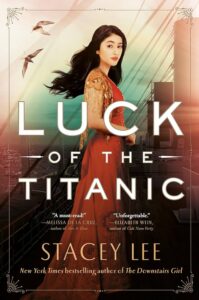
Luck of the Titanic by Stacey Lee (Young Adult)
History Smashers: The Titanic by Kate Messner
I Survived the Sinking of the Titanic, 1912 by Lauren Tarshis (Graphic Novel edition)
What was Built to Be a Ship of Dreams? The Titanic by Emmett Nahil, Shazleen Khan (Graphic Novel)
Tragedy at Sea: The Sinking of the Titanic by David Long
Tonight on the Titanic (Magic Tree House series) by Mary Pope Osborne
DK Eyewitness Titanic by DK Eyewitness
If You Were a Kid Aboard the Titanic by Josh Gregory
The Second Mrs. Astor by Shana Abe
Titanic Sisters by Patricia Falvey
Girl Who Came Home by Hazel Gaynor
Sisters of Fortune by Anna Lee Huber
Brillant Night of Stars and Ice by Rebecca Connolly
The Watch That Ends the Night by Allan Woolf
Nonfiction
A Night to Remember by Walter Lord
Night Lives On by Walter Lord
Voyagers of the Titanic passengers, sailors, shipbuilders, aristocrats, and the worlds they came from by R.P.T. Davenport-Hines
The Discovery of the Titanic by Robert D. Ballard
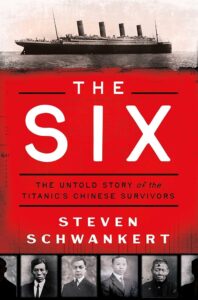
The Six: The untold story of the Titanic Chinese Survivors by Steven Schwankert
Unsinkable: The Full Story of the RMS Titanic by Daniel Allen Butler
Titanic: Voices from the Diaster by Deborah Hopkinson
Film and Television
Titanic ‘53
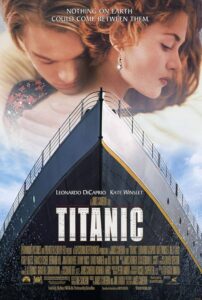
Titanic ‘97
Titanic TV Show 2012
A Night to Remember ‘58
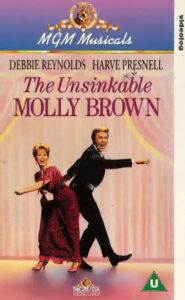
The Unsinkable Molly Brown ‘64
Lone Survivor, The Night Gallery 1971
Documentaries
The Six
Secrets of the Titanic
Titanic: The Complete Story
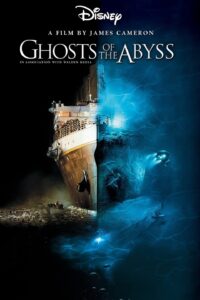
Ghost of the Abyss
Last Mysteries of the Titanic with James Cameron
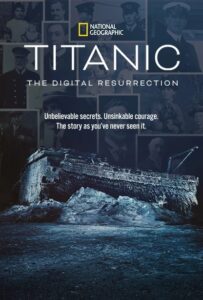
Titanic: The Digital Resurrection/Titanic: The Digital Resurrection: Beyond the Wreck
Titanic Inquiry
Recent Comments