
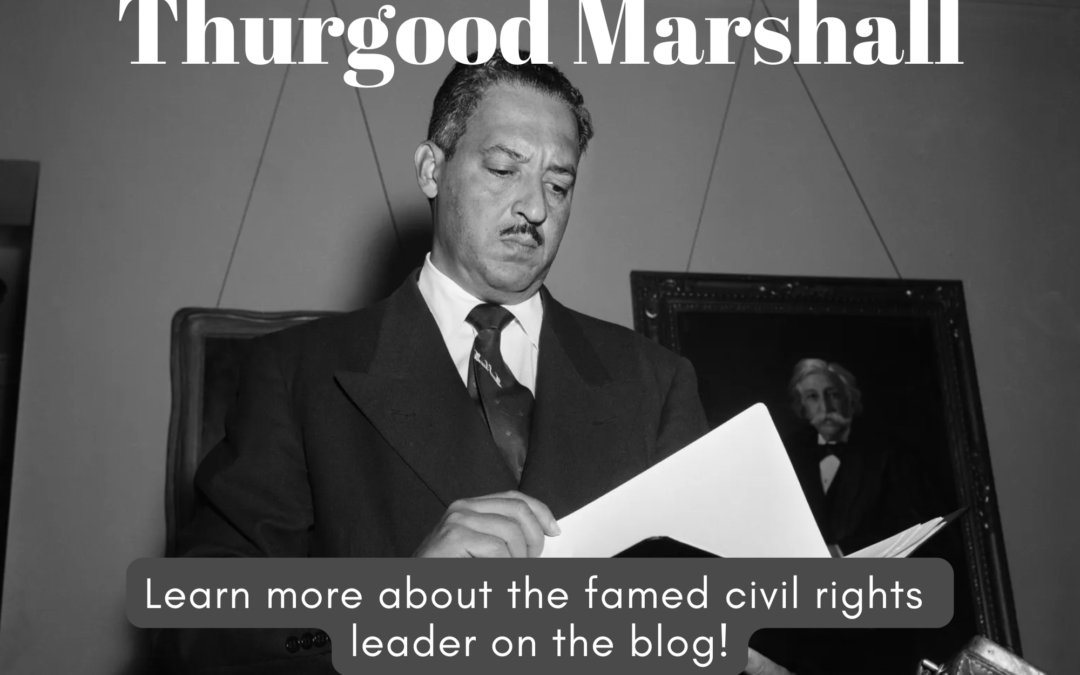
Today on the blog, we are celebrating the life and career of Thurgood Marshall. At the bottom of the blog, we have included a list of documentaries, books, and links to online articles for further research.
Thurgood Marshall was born on July 2, 1908 to Norma and William Marshall in Baltimore, Maryland. His mother was a teacher and his father worked as a waiter for various hotels in Baltimore. Shortly after he was born, the Marshall family moved to New York City in hopes of finding better employment. When Thurgood was six, the family moved back to Baltimore. His father, William, enjoyed following legal cases in the news and frequently took Thurgood with him to the court hearings. Thurgood credited his father when he became a lawyer, saying, “he taught me how to argue, challenged my logic on every point, by making me prove every statement”. In 1925, Thurgood graduated high school with honors and went on to study at Lincoln University in Pennsylvania, the oldest historical black college in America. At the University, he led the debate team to multiple wins and studied American Literature. One of his classmates was the poet Langston Hughes. Thurgood graduated with honors in 1930 and first applied to University of Maryland’s Law School, where he was rejected for being black. He later applied and accepted a slot at Howard University’s Law School in Washington D.C. One of his professors, Charles Houston, encouraged his students to use the law to fight for civil rights. Professor Houston would later become a mentor to the young Thurgood. He graduated in 1933 at the top of his law class and passed the Martina Bar a year later.
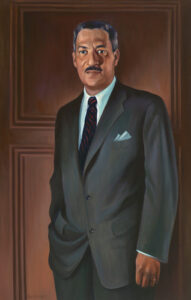
Thurgood opened his own law practice in Baltimore after passing the bar exam, however it was not financially successful. At this time, he started volunteering with the National Association for the Advanced for Colored People (NAACP) to help benefit his community. His first case was Murray v. Pearson in 1935. He represented Donald Gaines Murray alongside his mentor Charles Houston. Mr. Murray was rejected by the University of Maryland’s Law School for being a Black American. The judge on the case, Eugene O’Dunne ruled in Murray’s favor that he should be required to be admitted into the program. When the University appealed the case, Maryland’s Court of Appeals upheld Judge O’Dunne’s ruling saying that the school violated the equal protection to admit white students while keeping black students from attending school in state. The decision of the Appeals Court made all Colleges in Maryland required to integrate their students which created a precedent to make segregation illegal in the state. After the success of the case, Marshall joined Houston in New York City. Houston was working with the NAACP as their special counsel and hired Marshall as his assistant. Their first case in New York was Missouri ex rel. Gaines v. Canada in 1938. The two were hired by the plaintiff, Lloyd Lionel Gaines, who was rejected by the University of Missouri’s Law School on the basis of his race. When the Missouri court system rejected Gaines’ claims, Houston and Marshall appealed it to the Supreme Court. The Supreme Court heard the case in November of 1938 and the decision was made in December. Chief Justice Charles Evans Hughes said that if Missouri gave whites the opportunity to attend law school in state, it was required to do the same for blacks.
Marshall accepted a position as special counsel to the NAACP Legal Defense and Educational Fund in Washington DC. In Washington, he brought more cases to the Supreme Court and fought for equality.
In the early 1940s, Marshall fought for the end of wage disparities for black Americans winning almost all of them. Marshall brought 32 cases to the Supreme Court, winning 29 of them. His prominent Supreme Court cases during the 1940s were Smith v. Allwright and Shelley v. Painter. He became a member of the board of directors for the American Civil Liberties Union in 1939, and was a vocal critic of President Roosevelt executive order 9066. Executive Order 9066 allowed Japanese Americans to be put in concentration camps during World War II.
Marshall’s most famous case is Brown v. Board of Education. In 1951, a public school in Kansas refused to let a young girl enroll in the school closest to her home and told her to go to the segregated school further away. Her father Oliver Brown and other black residents filed a class action lawsuit against the school. Marshall appealed the case to the Supreme Court in 1952. In December of 1953, Chief Justice Earl Warren gave his decision. The Supreme Court ruled unanimously in Marshall’s favor. In his opinion, Justice Warren wrote “in the field of public education the doctrine of separate but equal has no place. Separate educational facilities are inherently unequal. In 1955, the Court ordered the desegregation of schools under Brown II.
President John F. Kennedy appointed Marshall to the United States Court of Appeals for the Second Circuit on September 23, 1961. The Second Circuit at this time was the most prominent appellate court in the country. He took office on October 23 of 1961. Two members of the Senate Judiciary Committee were pro-segregation which led to many delays in Marshall’s confirmation hearing, Senator Kenneth Keating, a Republican Senator said the two other committee members were biased against Marshall and purposely delayed the hearings. During the hearings, Marshall was faced with challenging questions from the two Southern members. The full Judiciary Committee voted on September 7 with a 11-4 vote in favor of Marshall. The full Senate vote was 56-14 votes and the Senate confirmed Marshall on September 11th, 1962. While on the Second Court, Marshall wrote 98 majority opinions, and none were reversed by the Supreme Court.
In June of 1967, President Johnson announced that he was appointing Marshall to the Supreme Court. The nomination was publicly favored by both political parties. The Senate Judiciary Committee voted in favor 11-5 to confirm the appointment. The full Senate voted in favor 69-11. On October 2, 1967, Marshall became the first Black American to serve on the Supreme Court. During his 25 years on the Court, Marshall continued to fight for civil rights. He spoke for affirmative action, women’s rights, and against the death penalty. He continuously fought to make the lives of the most vulnerable better. One of his law clerks was Elena Kagan.
When he was 82, Marshall retired from the Supreme Court. His successor, Clarence Thomas was nominated by President George W. Bush. Marshall died on January 24, 1993 of heart failure at 84. Chief Justice William Rehnquist gave a eulogy saying, “inscribed above the entrance to the Supreme Court building are the words ‘Equal justice under law.’ Surely no one individual did more to make these words a reality than Thurgood Marshall. Marshall is buried at Arlington National Cemetery.
Books
Thurgood Marshall: His Speeches, writings, arguements and opinons
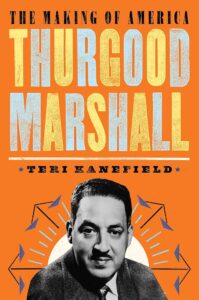
Thurgood Marshall by Teri Kanefield
Thurgood Marshall by Glenn Starks
Thurgood Marshall by Juan Williams
Up Close by Chris Crowe
Showdown: How Thurgood Marshall’s 1967 Supreme Court Confirmation Changed America by Will Haywood
Devil in the Grove Thurgood Marshall, the Groveland Boys and the Dawn of a New America by Gilbert King
Young Thurgood: The Making of a Supreme Court Justice by Larry Gibson
Documentaries and Movies
Mr. Civil Rights Thurgood Marshall and the NAACP
Thurgood
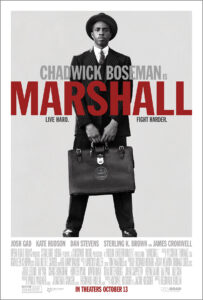
Marshall
Becoming Thurgood America’s Social Contract
Online Research
Primary documents about Thurgood Marshall at the Maryland State Library Center – website
Time Magazine, The Story behind the movie Marshall – article
NAACP article on Thurgood Marshall – article
NBC News, How Justice Thurgood Marshall Transformed Society – article
The Atlantic, Thurgood Marshall, 2015 article
The Atlantic, The Enduring Legacy of Thurgood Marshall – article
New York Times Magazine, What Thurgood Marshall Taught Me – article
National Geographic Article – Article
History, On This Day series. Thurgood Marshall confirmed as Supreme Court Justice – article
Recent Comments