
Today’s blog is about The Odyssey and The Illiad. Learn more about the origins of oral story traditions and explore the stories of the Ancient Greek poems, and why these epics are relevant today. At the bottom of the post, we have included modern books featuring some of the Greek myths and a further reading section.
Before there was written communication, our ancestors used to relay information in the form of stories. All around the world, people would gather in communal settings to hear about events, partake in ceremonies and for entertainment. These types of gatherings would be called oral storytelling. Oral storytelling would encompass gestures and voices to showcase various elements. Some forms of oral storytelling are poems, chants, and songs. Interestingly, the storytellers would be more focused on bringing the community together, instead of being factual. As history progressed, oral storytelling would lead to the creation of myths, fables, legends and more. In North America, the indigenous peoples like the Choctaw use oral storytelling to pass down the traditions to new generations. In Africa, storytellers known as griots would also serve as historians and genealogists. The griots would pass down their knowledge to the younger generations so that their culture would continue.
At one point, people started to write down these oral stories. One of the earliest records is from 2100 BCE with the story of Gilgamesh. In 770 BCE, the first hieroglyphics were made, and soon after that Homer wrote down The Iliad and The Odyssey. Homer is credited as the author of both epic poems because he was the one to write them down. Many scholars are still trying to find concrete evidence on Homer. Some believe that Homer was a group of people working together or that he was the sole writer. Another mystery surrounding Homer is the exact time period he was living. If both epic poems were written sometime before 700 BCE, that would mean he could have lived closer to the events of the Trojan War. However, nothing has been found, so the mystery remains.
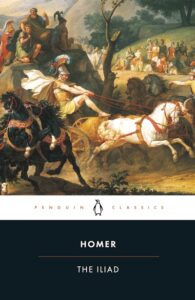
The Iliad and The Odyssey, both epic poems, focus on the historical events of The Trojan War. The Iliad recounts the long war ending after the siege of Troy. In the poem, the Greeks led by King Menelaus go to destroy the city of Troy in Anatolia, which is in modern day Turkey. Menelaus is angry that the Trojan prince Paris took his wife, Helen, and that becomes the catalyst for the long war. After ten years of fighting alongside the Greeks and Achilles on the Trojan shores, Odysseus comes up with the idea of creating a giant wooden horse to fool the Trojans. The Trojans believe that the object is an offering for the Gods when it’s presented, and they bring it into the city. At night, the Greek army emerges from the giant horse and the final battle begins. At some point, Paris kills Achilles by shooting an arrow into his heel, but the war is won by the Greeks ultimately. The Iliad ends with the Gods angry at the Greeks for breaking Zeus’s law and begin to torment the survivors of the war.
The Odyssey begins as Odysseus sets sail for Ithaca after the Trojan War. Odysseus and his men encounter various islands throughout the Mediterranean that are home to many mythical beings. The men first meet Polyphemus, the one-eyed giant who is Poseidon’s son. Odysseus blinds Polyphemus in an escape attempt, which angers Poseidon and makes it nearly impossible to return home. The men then go to an island that is the home of Circe, a powerful witch that turns the men into pigs. After escaping Circe’s island, they encounter the sirens which brings them to Calypso. Odysseus washes up on the shore of another island and spends seven years with Calypso. Hermes comes and tells Calypso to let Odysseus go, and she allows it. While Odysseus is traveling back home, his wife Penelope and son Telemachus are dealing with many suitors trying to obtain the throne. Odysseus finally returns to Ithaca after twenty years as an older man hardly anyone recognizes, but he must pass Penelope’s test first to prove himself. Penelope makes the suitors tie the bow of Odysseus and shoot an arrow through several axe heads, an act that only Odysseus himself could do. Odyssesus wins the contest and presents himself, and he is reunited with Penelope.
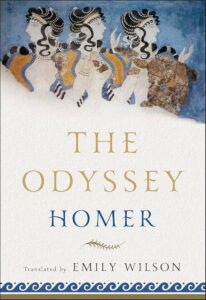
Why is this epic poem relevant? This year, filmmaker Christopher Nolan released his newest film, The Odyssey based on the newest translation by Emily Wilson. In a recent interview with PBS, Wilson expresses that the poem has long lasting themes that attracts new readers. The poem is about the trauma of living and surviving war, returning home a different person and much more. In the latest translation, the leadership of Odysseus is written with more complexity as we see on each step of the journey how his style of leadership evolves. In The Iliad, we get to see Odysseus as a fierce warrior and strategist in the destruction of Troy, but in his journey homeward, he is constantly having to switch his abilities to fit the situation. An example of this is the scene with Polyphemus, where he shows strength has to be the answer and proceeds to blind the giant. However, by choosing to blind Polyphemus, Odysseus incurs the wrath of Poseidon. This makes Odysseus a much more enjoyable character to follow because he has to not only make decisions that may cause more delay in the journey but also as we see him try and work out every solution.
Books
Circe by Madeline Miller
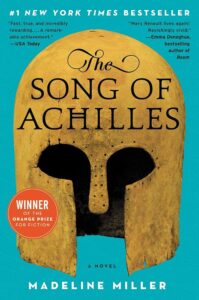
Song of Achilles by Madeline Miller
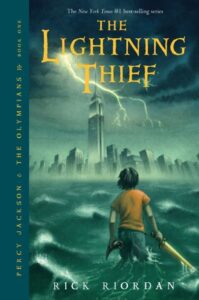
Percy Jackson series by Rick Riordan
A Thousand Shipes by Natalie Hynes
Stone Blind by Natalie Haynes
Ariadne by Jennifer Saint
Elektra by Jennifer Saint
Hera by Jennifer Saint
Atalanta by Jennifer Saint
Penelopiad by Margaret Atwood
Mythos by Stephen Fry
Lore by Alexandra Bracken
Lore Olympus by Rachel Smythe
Further Reading
https://education.nationalgeographic.org/resource/storytelling-x/
https://education.nationalgeographic.org/resource/storytelling-and-cultural-traditions/
https://www.folkschool.org/2023/10/15/the-history-and-art-of-storytelling/
https://www.pbs.org/newshour/show/why-the-ancient-story-of-the-odyssey-still-resonates-today
https://www.britishmuseum.org/blog/myth-trojan-war
https://www.today.com/popculture/movies/the-odyssey-classics-professors-review-rcna588405
https://www.history.com/articles/trojan-war
https://www.forbes.com/sites/teddymcdarrah/2026/07/17/why-the-odyssey-remains-relevant/
https://www.britishmuseum.org/blog/who-was-homer
Recent Comments