
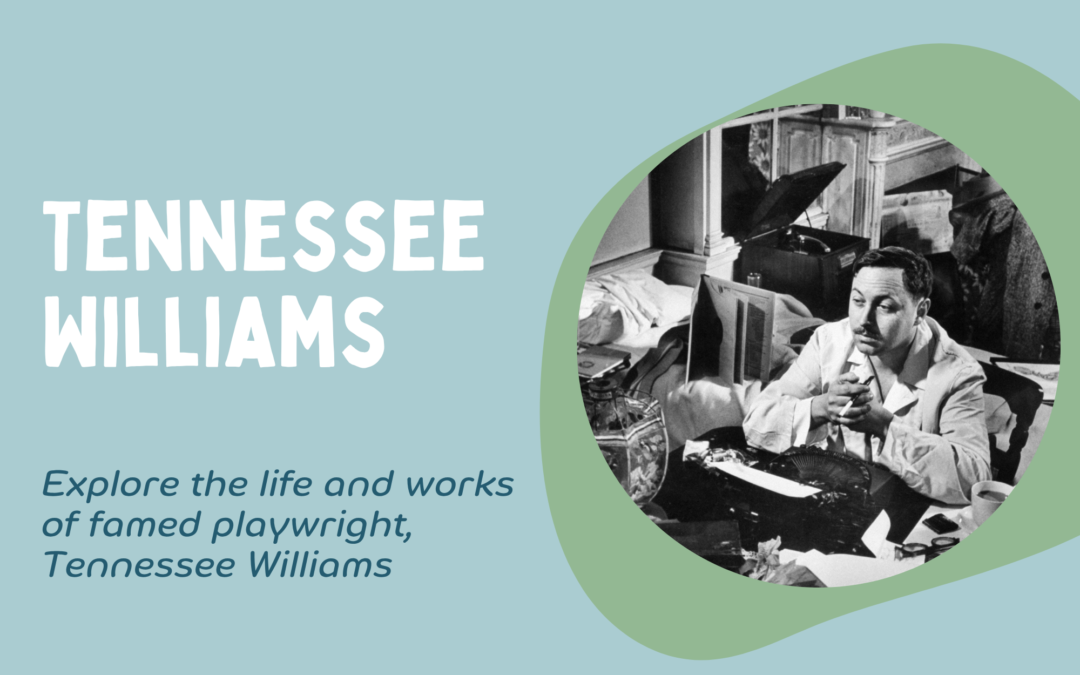
We are looking into the career of one of the 20th Century’s greatest playwright, Tennesse Williams. Williams pioneered poetic realism, which showcased the balance between raw and vulnerable emotion in a poetic textual structure.
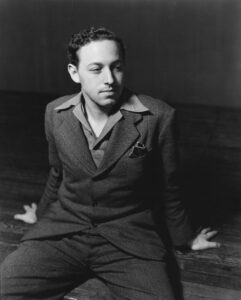
Thomas Lanier Williams was born in 1911 to Cornelius Coffin Williams, a shoe executive, and Edwina Dakin, a southern belle. He had two siblings, his sister Rose and brother Walter. The family resided in Columbus, Mississippi and Williams said he had a very happy childhood. As a young child, Williams contracted diphtheria and nearly died. He was confined to the family home for nearly a year to recuperate. His mother Edwina carefully nursed him back to health, while his father Cornelius saw the illness as a form of weakness. When Williams was eight, his father got a new job in St. Louis. When the family moved to St. Louis, Williams thought it was terrible and began writing to cope. The family kept moving around St. Louis due to his father’s irrational behavior.
n 1929, Williams enrolled at the University of Missouri in Columbia. He submitted some of his early plays and poetry in writing contests to try and earn extra money. The first play to gain some recognition was Beauty is the Word. While a junior, he could not pass the military tests and his father pulled him out of school to work at the shoe company. He was increasingly becoming more unhappy and he had his first mental breakdown at 23 years old. In the mid 1930s, his parents legally separated. In 1938, Williams moved to New York City where he studied playwriting at the Dramatic Workshop. When he graduated the program, he took on his stage name Tennessee to pay homage to his southern roots.
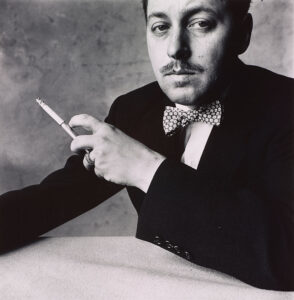
Williams was awarded prize money from the Rockefeller Foundation for his play, Battle of Angels. Through the Foundation, he wrote items for the Works Progress Administration and worked as a contract writer for MGM Studios. His first successful play was The Glass Menagerie in 1944. The play was critically acclaimed and Williams won his first Drama Critics’ Circle Award as well as a special Tony Award for Best Play Produced in America. The Glass Menagerie follows the Wingfield family as they recount the story of their troubled relationships. The play is considered to be his most autobiographical. The character of Laura closely resembles his sister Rose after she was forced to have a lobotomy which went horribly wrong and left her institutionalized for the rest of her life. The success of the play allowed Williams to send half the royalties to his mother.

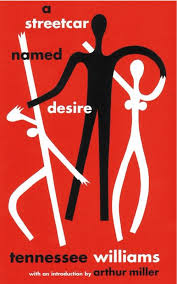
His next greatest play was A Streetcar Named Desire in 1947. The play was directed by Elia Kazan, who would go on to direct several of Williams’ works. A Streetcar Named Desire follows the slow mental breakdown of Blanche DuBois after losing the family mansion. Blanche moves to New Orleans to live with her sister Stella and her husband Stanley. Streetcar is widely considered to be one of the greatest American plays because of its raw and vulnerable look at mental illness, and familial conflict. After the success of Streetcar, his next hit is Cat on a Hot Tin Roof. Cat on a Hot Tin Roof centers around Maggie and Brick’s marriage surrounding Big Daddy’s birthday party.The play takes place in one room that creates the majority of the tension. The other popular plays from this time period are The Rose Tattoo, Orpheus Descending, Summer and Smoke, and The Night of the Iguana. Around this time, Williams met Frank Merlo, a military veteran and actor. Their relationship lasted 14 years. Merlo became Williams’ secretary and helped in times of Williams’ depression when it flared up. Williams fondly remembered that they were incrediblely happy. Merlo and Williams broke up when Merlo got tired of Williams’ drug addiction. However, Merlo shortly was diagnosed with lung cancer
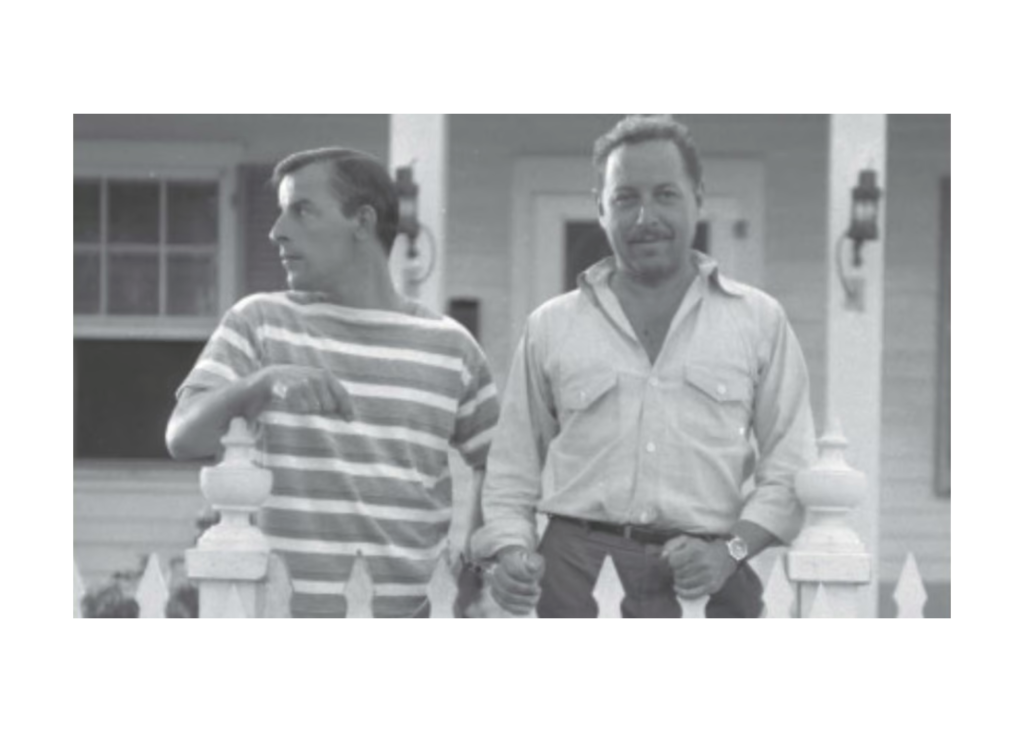
In the 1960s, Williams’ career started to suffer. He was getting negative coverage in the press as they were getting annoyed with his style of characterization of scandalous topics. Williams cared for Frank during his illness and Frank died in 1963. After his death, Williams became more reliant on drugs, which led to his brother hospitalizing him. Williams was released from his hospital stay in the early part of 1970. In this decade, he wrote more plays and short stories. He also wrote his memoir, in which he talked about his writing style, plays and his addictions to alcohol and drugs. His last published work was released in 1980 titled, Clothes For a Summer Hotel, based on the lives of Zelda and F. Scott Fitzgerald. In 1983, Tennessee Williams was found dead in a New York City hotel room. He is buried near his mother at the Calvary Cemetery in St. Louis Missouri. In his will, most of his estate was left to his sister Rose, so that she could get better care in a private hospital.
Tennessee Williams brought poetic realism, raw emotion, and a level of authenticity to his plays. Williams won two Pulitzer Prizes for A Streetcar Named Desire and The Glass Menagerie. He won the Tony Award for Best Play for The Rose Tattoo (1951).
Must Read Plays
The Rose Tattoo
Night of the Iguana
Cat on a Hot Tin Roof
The Glass Menagerie
A Streetcar Named Desire
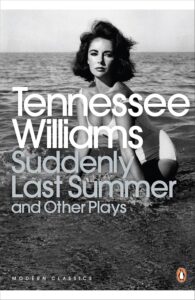
Suddenly Last Summer
Orpheus Descending
Movies Based on Williams’ Plays
Cat on a Hot Tin Roof (1958)
The Night of the Iguana (1964)
Suddenly Last Summer (1959)
A Streetcar Named Desire (1951)
The Glass Menagerie (1950)
The Rose Tattoo (1955)
Baby Doll (1956)
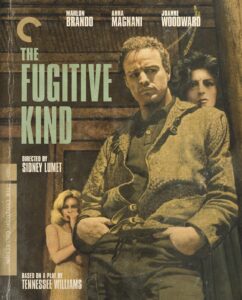
The Fugitive Kind (1960)
Read More About Tennessee Williams
Early Stories by Tennessee Williams
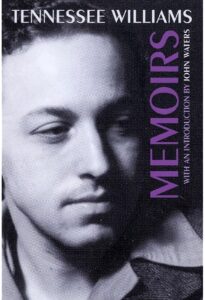
Memoirs by Tennessee Williams
Follies of God: Tennessee Williams and Women of the Fog by James Grissom
Tennessee Williams Mad Pilgrimage of the Flesh by John Lahr
The Kindness of Strangers: The Life of Tennessee Williams by Donald Spoto
Tom: The Unknown Tennessee Williams by Lyle Leverich
References
https://www.pbs.org/wnet/americanmasters/tennessee-williams-about-tennessee-williams/737/
https://www.poetryfoundation.org/poets/tennessee-williams
https://www.kwahs.org/tennessee-williams-museum/
https://atc.org/a-look-at-tennessee-williams/
https://hnoc.org/publishing/first-draft/the-life-and-death-of-tennessee-williamss-beloved
https://www.newyorker.com/books/page-turner/man-queered-broadway
https://archive.nytimes.com/www.nytimes.com/books/00/12/31/specials/williams-legacy.html
https://npg.si.edu/blog/happy-106th-tennessee
https://www.themorgan.org/exhibitions/tennessee-williams
https://ew.com/movies/tennessee-williams-movies/
Recent Comments