
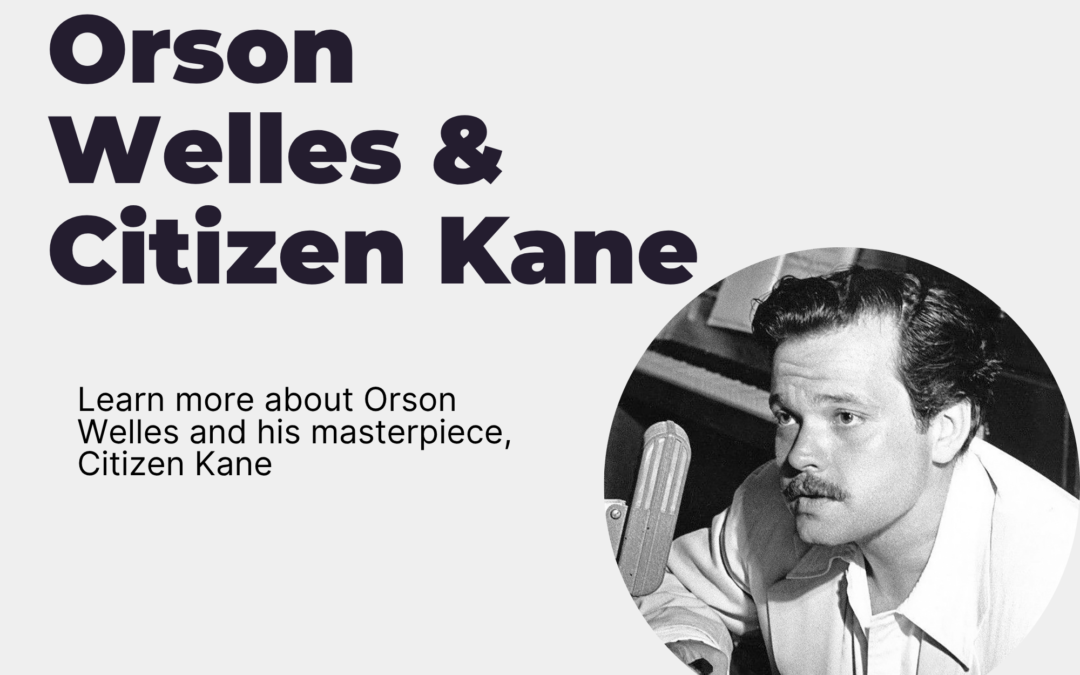
Today on the blog, we are taking a look at one of the influential filmmakers of the 20th century, Orson Welles. Orson Welles is known for his radio dramas and his iconic film, Citizen Kane.
Orson Welles was born on May 6th, 1915 in Wisconsin to Beatrice and Richard Welles. Welles’s father was an inventor of a bicycle lamp and his mother was a concert pianist. When he was about four years old, his parents separated and Orson moved with his mother to Chicago. While in Chicago, his mother gave him piano lessons and he also studied the violin in hopes of becoming a musician. However, Beatrice passed away a few days after his ninth birthday. After her passing, Welles gave up his musical training. Shortly after her funeral, Welles lived with his father, Richard. Richard left his career as an inventor after he became an alcoholic. For three years, Welles and his father hopped around before they settled in an apartment in Chicago with a friend of the family, Maurice Bernstein. Richard enrolled Orson at the Todd Seminary for Boys in Woodstock, Illinois. At Todd, Welles discovered theater and radio. At the encouragement of the school’s headmaster, Welles thrived in the drama department and was determined to become an actor. In 1930, Richard died of kidney failure due to his drinking. His father left it up to Orson to name his guardian, and he picked Mr. Bernstein. After graduating from Todd, Orson traveled abroad, using some of his inheritance money.
Welles made his Broadway debut at age nineteen as Tybalt in a revival of Romeo and Juliet. Welles’ performance caught the attention of producer John Houseman. Houseman was scouting talent to join the CBS radio show, The March of Time. Welles performed a reading of the play Panic in March 1935. After his debut, Welles made more radio appearances on several channels and was able to supplement his Broadway paychecks. Welles worked with Houseman under the Federal Theater Project until 1937, when they broke off to start their own theater company, Mercury Theatre. The Theatre was doing so well that CBS offered Welles a summer radio slot. The summer slot would run for thirteen weeks with original music by Bernard Hermann. On October 30, 1938, the Mercury Theatre aired their War of the Worlds adaptation of H.G. Wells. Welles and his troupe did so well, that people across the country were scared that real Martians had invaded Earth. Halfway through the broadcast, CBS put out an announcement saying that the program was not real but a fictional story. Many listeners who tuned in late to the broadcast missed the opening introduction, and were also fueled by the growing tension in Europe that led to many panicked phone calls to the CBS station. Nevertheless, this put Orson Welles on the national stage, and soon after he signed a Hollywood contract with RKO Pictures.
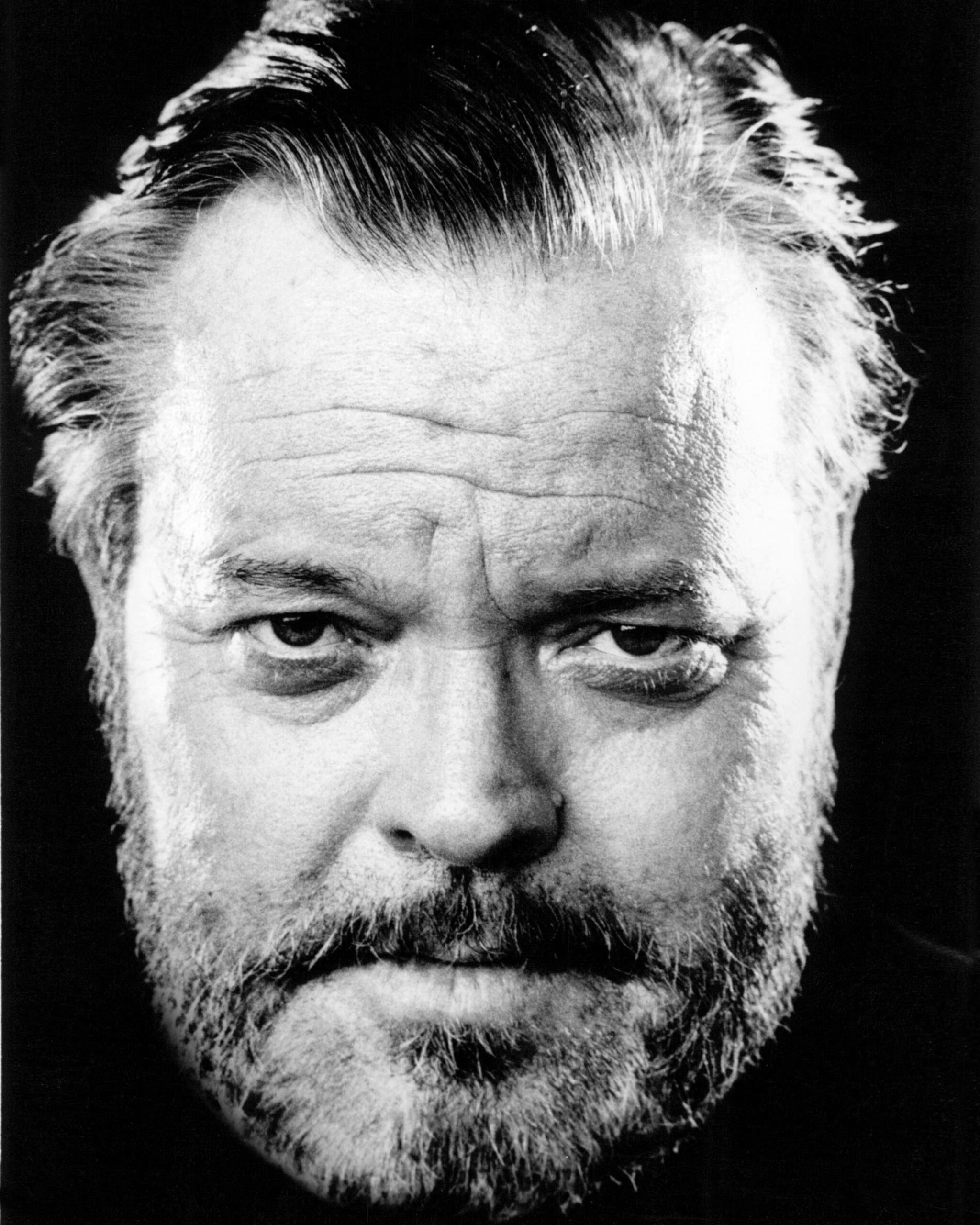
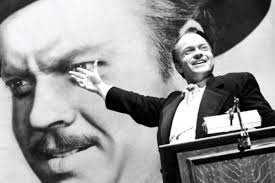
RKO Pictures had agreed to give Welles final cut privilege, which was unheard of at the time. Welles submitted a screenplay which he co-wrote with Hermann Mankiewicz titled Citizen Kane. Mankiewicz developed the character of Kane based on William Randolph Hearst. He knew the magnet socially until he was cast out of their social circle. Welles and Mankiewicz re-worked the screenplay based on notes they would send each other until Welles thought the script was ready. Welles hired many of his Mercury Theatre actors, all who had never acted in a film before. Citizen Kane changed the way film was made. One aspect of the film is its narrative structure. The bulk of the story of Charles Foster Kane is told by many characters in a series of flashbacks. In the beginning section of the film Welles incorporates a newsreel bulletin that mimics documentary filmmaking. The film bounces back and forth between multiple genres that creates this intriguing portrait of Kane. Before the film was to be released, Welles and RKO made sure not to publicly mention Hearst’s influence on Kane. Efforts to keep it hidden failed, as gossip columnist Hedda Hopper snuck into a screening, and wrote a scathing review on behalf of Hearst. Hearst was so angry that he told his newspapers that they were not allowed to run advertisements or mention the film in a positive light. Major theater owners did not show the film due to pressure from Hearst. It is reported that Hearst was about to expose some secrets of the industry if RKO went ahead and released the film. The non- Hearst owned papers called the film a masterpiece and lauded it for its originality.
At the end of the day, Citizen Kane was released on September 5, 1941. The film was nominated for 9 Academy Awards but only won for Best Original Screenplay. The film has regained popularity and is frequently cited as one of the best movies of all time.
References
https://npg.si.edu/blog/orson-welles-and-70th-anniversary-war-worlds
https://www.bbc.com/culture/article/20150720-whats-so-good-about-citizen-kane
https://www.pbs.org/wgbh/americanexperience/features/kane-william-randolph-hearst-campaign-suppress-citizen-kane/
Book Recommendations
Citizen Kane: a Filmmaker’s Journey by Harlan Lebo
Young Orson The Years of Luck and Genius on the Path to Citizen Kane by Patrick McGilligan
The Making of Citizen Kane by Robert L Carringer
Orson Welles by Simon Callow
Recent Comments