
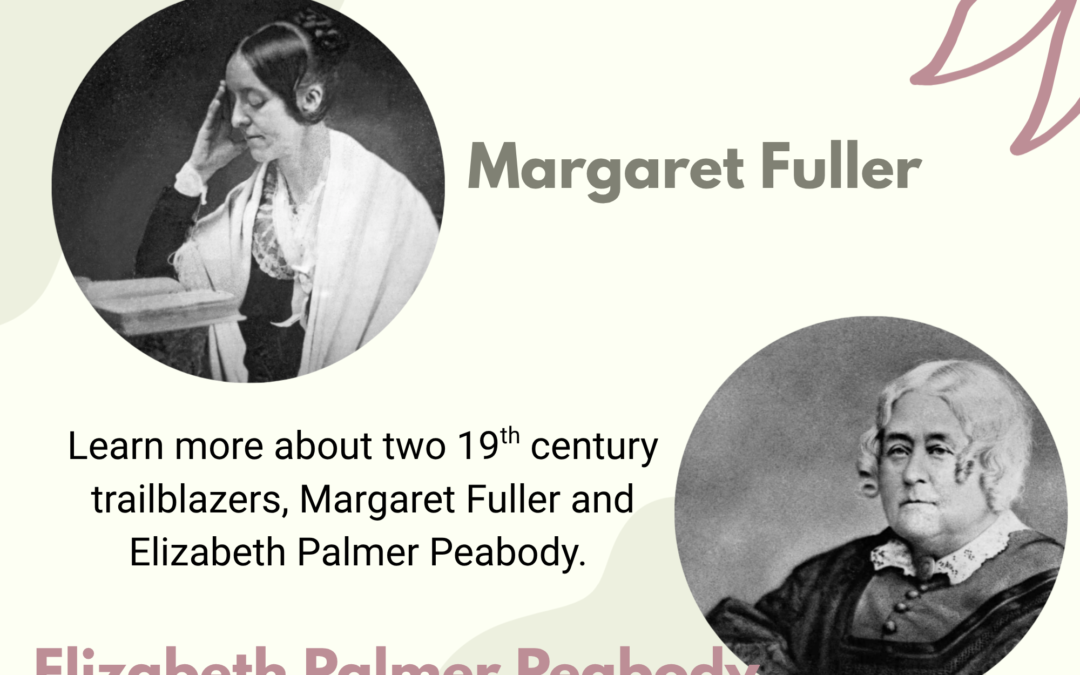
Today on the blog, we are looking at two incredible women from Massachusetts. Both of the women we are discussing today were part of the Transcendentalist movement. The Transcendentalist movement is commonly associated with Ralph Waldo Emerson and Henry David Thoreau. The movement was a theological and philosophical thought which combined the goodness of nature and people as well as the importance of individualism. To learn more about the Transcendentalist movement, Elizabeth Palmer Peabody and Margaret Fuller, please see the futher study section.
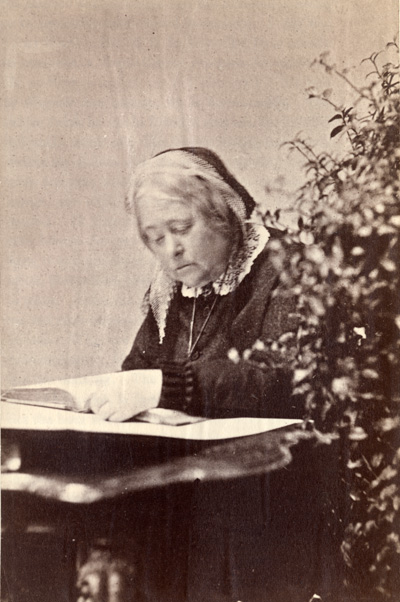
Elizabeth Palmer Peabody, was affectionately known as the grandmother of Boston. Elizabeth was born in 1804 and was the oldest child of Elizabeth Palmer Peabody and Nathaniel Peabody. The Peabody family moved around Massachusetts during the early years of Elizabeth’s life before settling down in Salem. Her mother Elizabeth set up her own school and enrolled her young daughter. They moved again in 1821 to Lancaster, Massachusetts, and Elizabeth set up her own school and began teaching her two younger sisters Mary and Sophia. One year later, Elizabeth met and befriended Ralph Waldo Emerson. In 1825, Elizabeth moved to Brookline in Boston and created her first all girls school with her sister Mary. The school was successful, however they ran into financial trouble which then led to the loss of students. The school shut down in 1833. After the sisters went their separate ways, Elizabeth met and helped Bronson Alcott start the Temple School in Boston. She recorded several lectures that were published. The partnership between Peabody and Alcott was short-lived because Elizabeth believed that Alcott didn’t let his students express themselves and always would sway their viewpoints towards his personal ones. The disagreements became more frequent and Elizabeth left the school and went back to Salem. She left teaching and opened up her own bookstore, and it flourished. The bookstore hosted discussions with local writers and philosophers like Ralph Waldo Emerson, Margaret Fuller and Dr. William Channing. The bookstore also contained a section of foreign works to help create a well rounded establishment. Around this time, she helped publish, The Dial, the most well known journal on the Transcendentalist movement. Her most important contribution to Boston society was the creation of kindergarten. In the mid 1850s, Elizabeth met the Schurz family who had a German taught kindergarten in Wisconsin. She quickly became interested in the education of children with the method created by Friedrich Froebel. In 1860 on Pinckney Street, she opened up her own English speaking Kindergarten school. Elizabeth spent the rest of her life promoting the importance of kindergarten education. Elizabeth died in January 1894 and is buried in the Sleepy Hollow Cemetery in Concord Massachusetts.
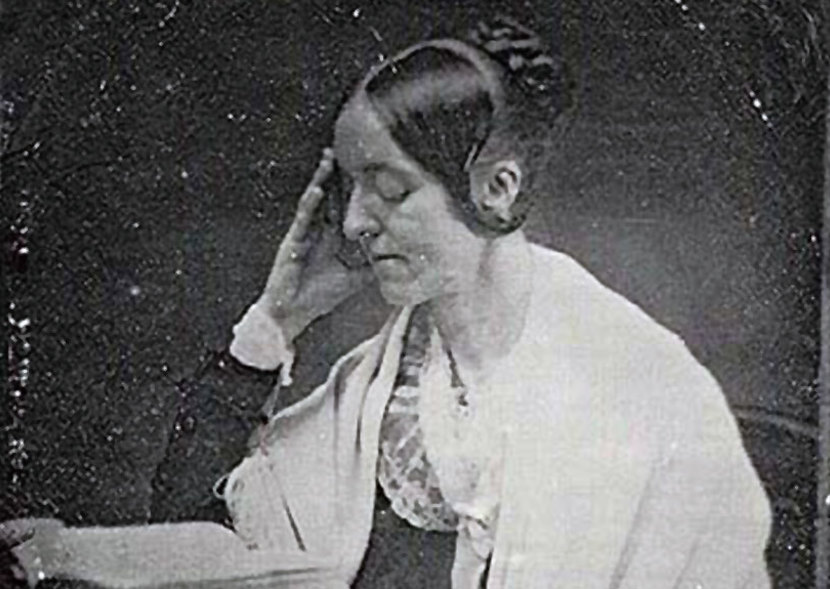
Sarah Margaret Fuller was born on May 23rd 1810 to Timothy and Margaret Crane Fuller. Margaret was given a full education because her father Timothy was a respectable lawyer and state senator. She was taught privately at their home in Cambridgeport and later studied at Groton. At Groton, she was reading at an advanced level and learned several languages including Greek. In 1835, her father died unexpectedly. In order to care for herself, she took a position at the Boston Temple School under Bronson Alcott as well as the Greene Street School in Providence Rhode Island. By the end of the 1830s, Margaret became friends with Ralph Waldo Emerson, and joined the Transcendentalist movement. Fuller along with Elizabeth Palmer Peabody created a conversation group for the women of Boston to come together and discuss topics and insight curiosity among women. In addition to her social work in Boston, she pursued a literary career. She edited The Dial and moved to New York, where she was a writer and editor for the New York Tribune. During her tenure at the Tribune, she became a respected journalist, and wrote on a wide range of interests including politics and social reform. Her best work is Women in the Nineteenth Century, and is considered to be one of the earliest feminist writings published in the United States. In 1846, Fuller travelled across Europe as one of the first female foreign correspondents. She started in England and made her way to Rome. While in Italy she wrote about the 1848 Italian Revolution. Also in Rome, she met her husband, Marquis Giovanni Angelo Ossoli, a nobleman. She gave birth to their son Angelo in 1848. After the end of the Italian Revolution, Fuller and her family were sailing back to America on the Elizabeth. The ship caught fire and sank off the coast of Fire Island in New York. Fuller and her family all died during the sinking. Her writings are considered her legacy which many credit as the start of the Women’s movement. Henry David Thoreau was sent to New York by Emerson to locate the bodies of Fuller and her family, but only the body of the child was ever found.

Further Study and References
Elizabeth Palmer Peabody
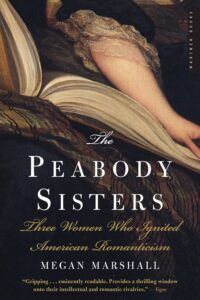
The Peabody Sisters: 3 Women who ignited American Romanticism by Megan Marshall
The Bright Circle: Five Remarkable Women in the Age of Transcendentalism by Randall Fuller
Elizabeth Palmer Peabody Article from the Boston Athenaeum
Elizabeth Palmer Peabody biography from Walden Woods Project
Elizabeth Palmer Peabody article from The Westend Museum
Remembering Elizabeth Palmer Peabody, Teacher’s College at Columbia University
Margaret Fuller
Margaret Fuller: Collected Writings by Magaret Fuller
Margaret Fuller: a new American life by Megan Marshall
Finding Margaret Fuller by Allison Pataki
Undaunted: How women changed American journalism by Brooke Kroeger
Margaret Fuller biography from MA Women’s History Center
Margaret Fuller article from the New Yorker
Margaret Fuller article from National Park Service
Transcendentalism
American Bloomsbury by Susan Cheever
The Emerson Circle: Concord Radicals who reinvented the world by Nichols J. Bruce
Nature by Ralph Waldo Emerson
Transcendentalists and their world by Robert A. Gross
Transcendentalism and Social Reform article from the Gilder Lehrman Institute of American History
Transcendentalism Article from History Channel
Recent Comments